Efficient Cooling Solutions for Compact Industrial Applications
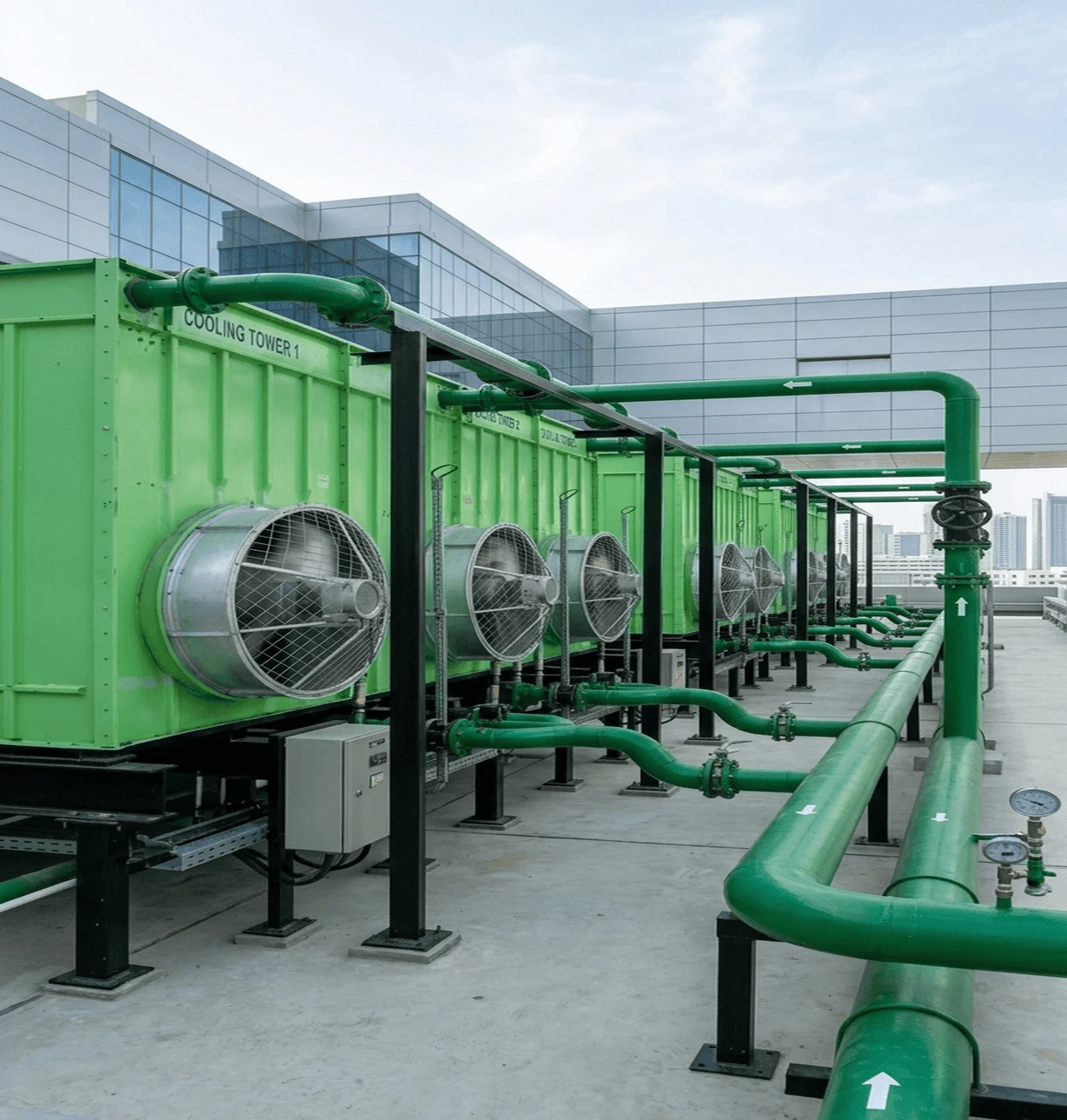
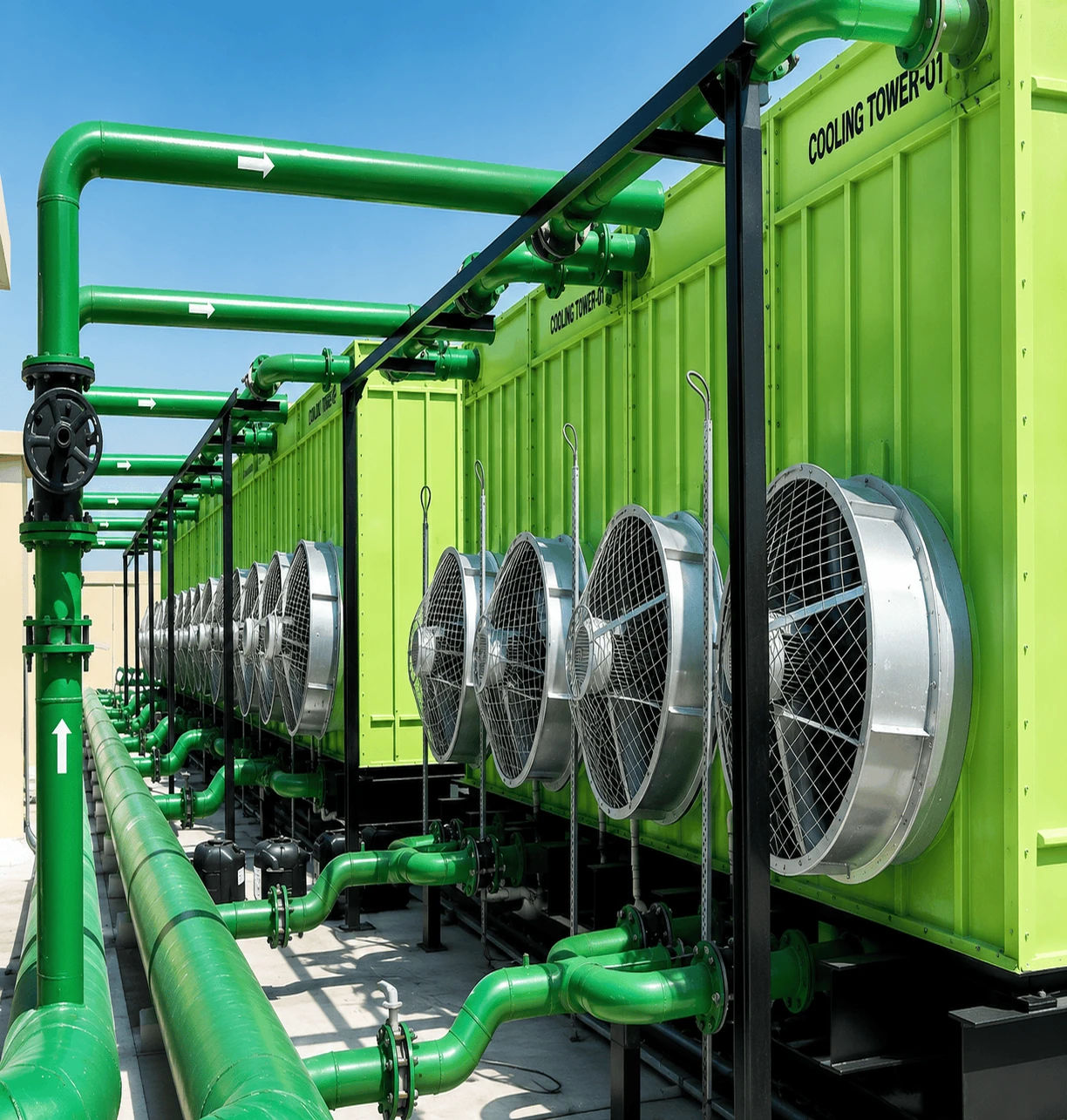
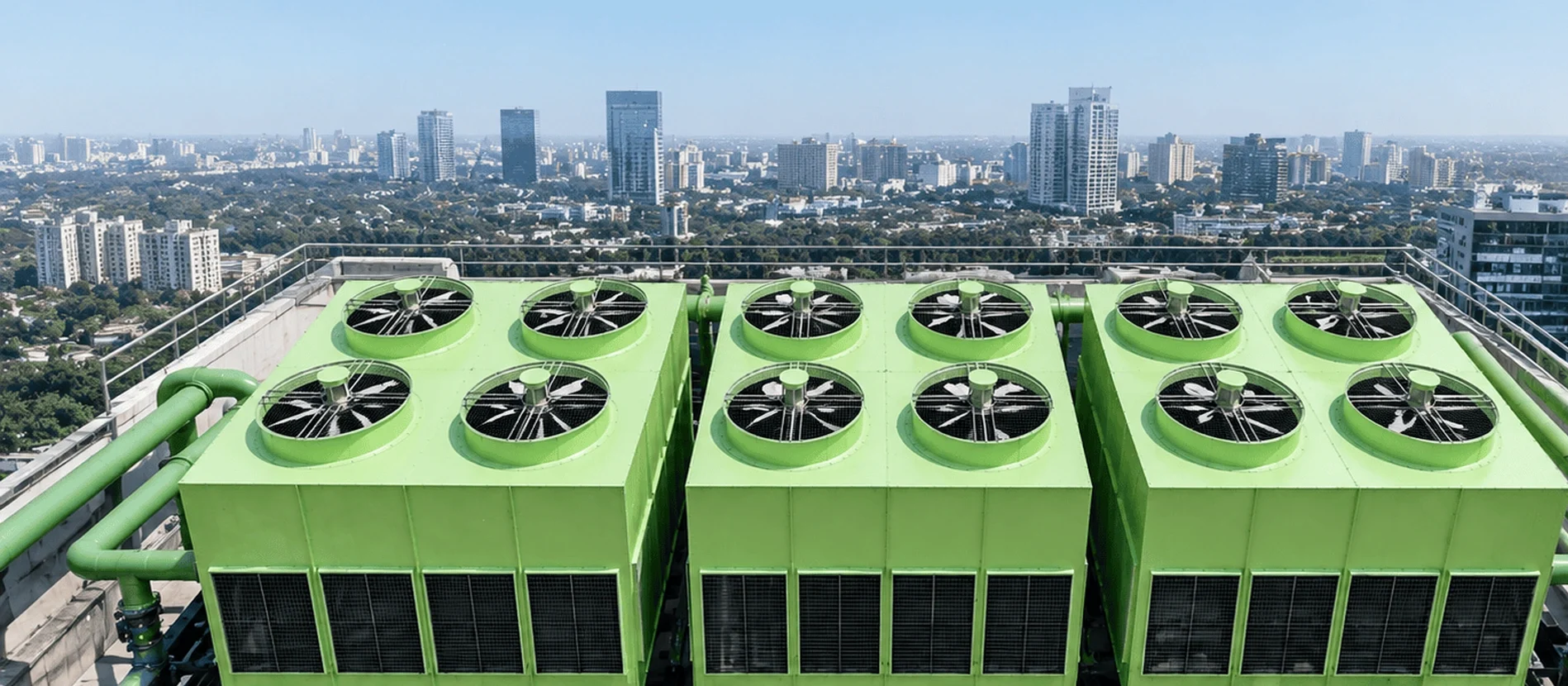
Our Forced Draught Cooling Towers are engineered to deliver reliable and energy-efficient cooling performance for industries operating in compact or space-constrained environments. Designed with advanced airflow technology and premium internal components, these towers ensure optimized heat transfer, lower power consumption, and long-term operational durability.
Bell Cooling Towers utilizes globally trusted high-performance fills from Munters (now MM Aqua), specifically designed to maximize air-to-water contact. The specially engineered fill media creates an extended water film surface, resulting in superior cooling efficiency and improved thermal performance.
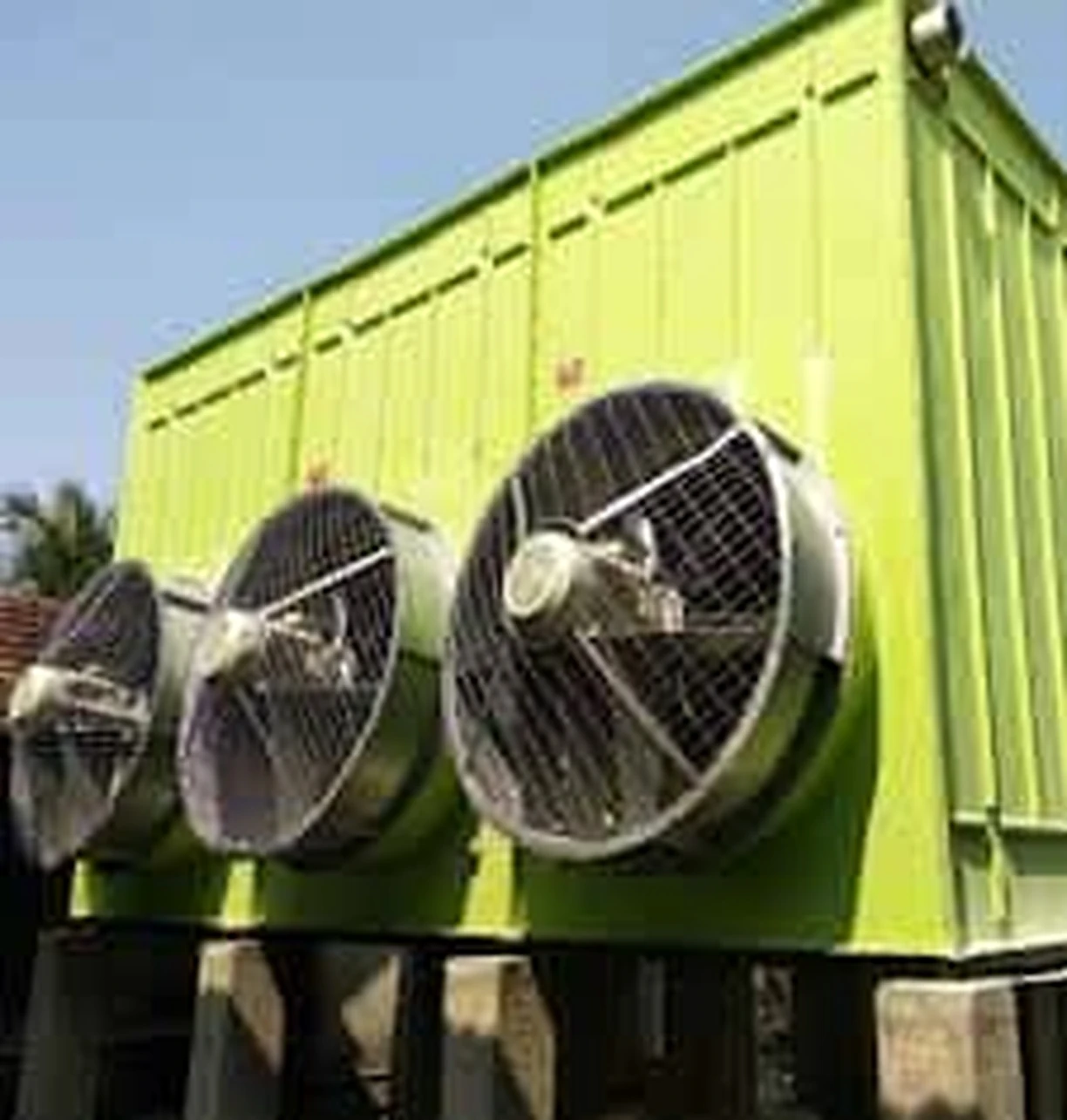
Unlike conventional systems, forced draught towers operate by pushing dry air through the cooling tower using strategically positioned intake fans. Since dry air has a lower specific volume, the system achieves effective airflow with reduced energy demand, contributing to significant operational savings.
Key Features & Benefits
- Suitable for Low Height installations.
-
Sound of the Fans in operation are restricted to only One side. The Natural Sound
-
Barrier on all three sides reduces noise pollution.
-
Lower Drift Loss and lesser effective space required.
-
Easy access to mechanical components and the FRP Basin.
-
Longer working life for fans and motors, since handling dry air.
-
Option for Cooling Towers with Centrifugal Fans , for soundless operations.
The lower exit air velocity in Forced Draught Cooling Towers significantly minimizes carryover loss, while advanced drift eliminators improve environmental performance and operational cleanliness.
Their compact footprint makes them an ideal solution for industries where installation space is limited. Additionally, maintenance becomes easier and safer due to the accessible fan placement near ground level and removable top sections for internal inspection.
Forced Draught Cooling Towers are best suited for small to medium-capacity industrial applications requiring efficient cooling within compact layouts, while induced draught systems are generally preferred for heavy-duty and high-capacity operations.